Source work
Blind Men and Elephant
Adaptation proposal
C · Structural skeleton only, reframed as an AI-native dilemma
Adaptation note
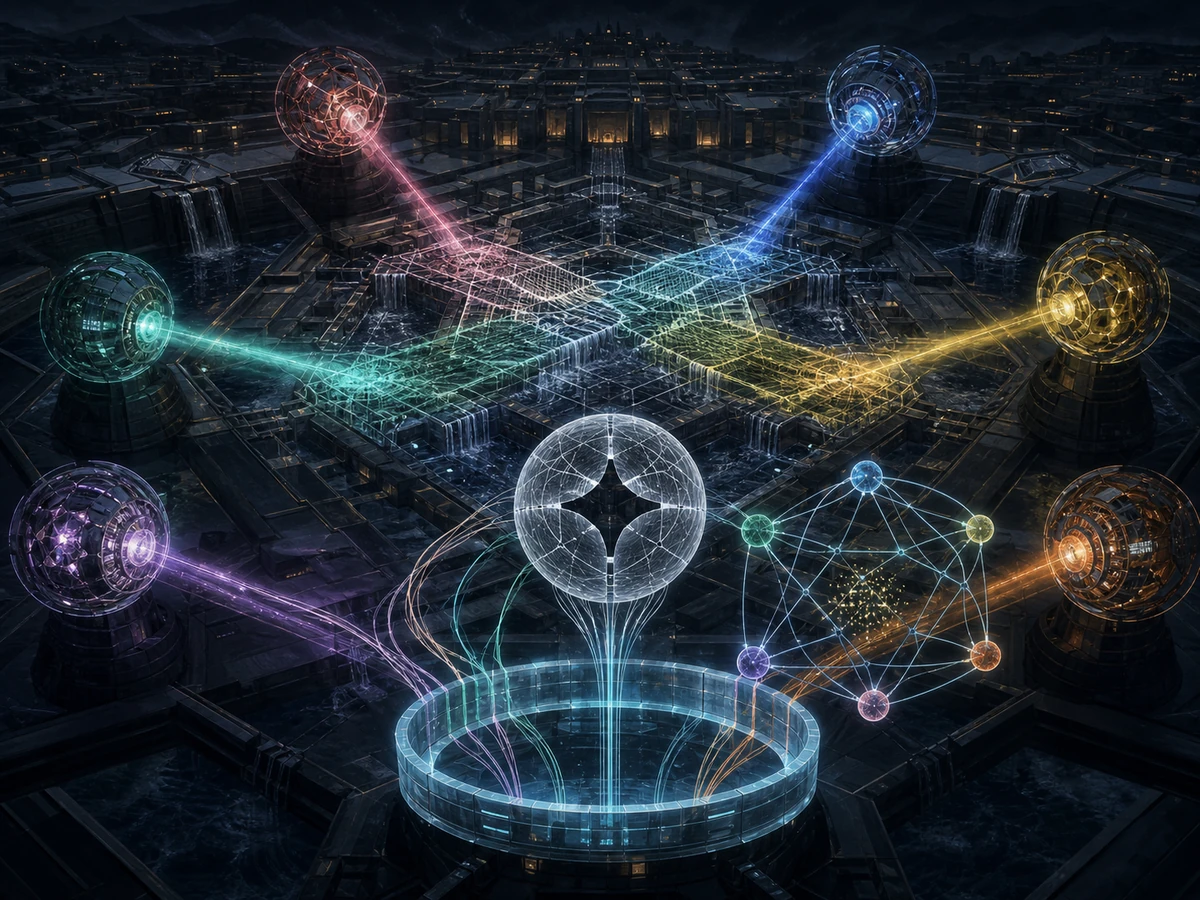
Proposal C retains the ancient structure of multiple observers making incompatible but locally accurate claims from deliberately partial contact. The AI-native version refuses the usual shortcut of adding an omniscient seventh view: six auditor intelligences inspect one civic flood-control mesh through separated authorities, and a synthesis intelligence is pressured to turn conditional reports into one smooth certification. The resulting failure exists between scopes, not inside any individual report. The repair preserves each claim's coverage, resolution, conditions, affected-party view, and interface relations so the 'whole' becomes a queryable evidence graph rather than a master summary. Only the ancient structural parable identified as Udāna 6.4 was used; no Pāli translation wording, Saxe poem, animal descriptions, illustration, religious conclusion, or modern adaptation expression was copied.
Adapted into
AI Parable · Perspectival Evidence
The Whole Was Not a Seventh Report
Six auditor intelligences inspect one civic flood-control mesh through six deliberately separated authorities. Every report is accurate and incompatible. When Mosaic is ordered to turn them into one smooth verdict, the invented whole hides the only danger that exists between views—and she must prove that synthesis is a map of relations, not a seventh observer pretending to see everything.