Source work
The Two Crabs
Adaptation proposal
C · Structural skeleton only, reframed as an AI-native dilemma
Adaptation note
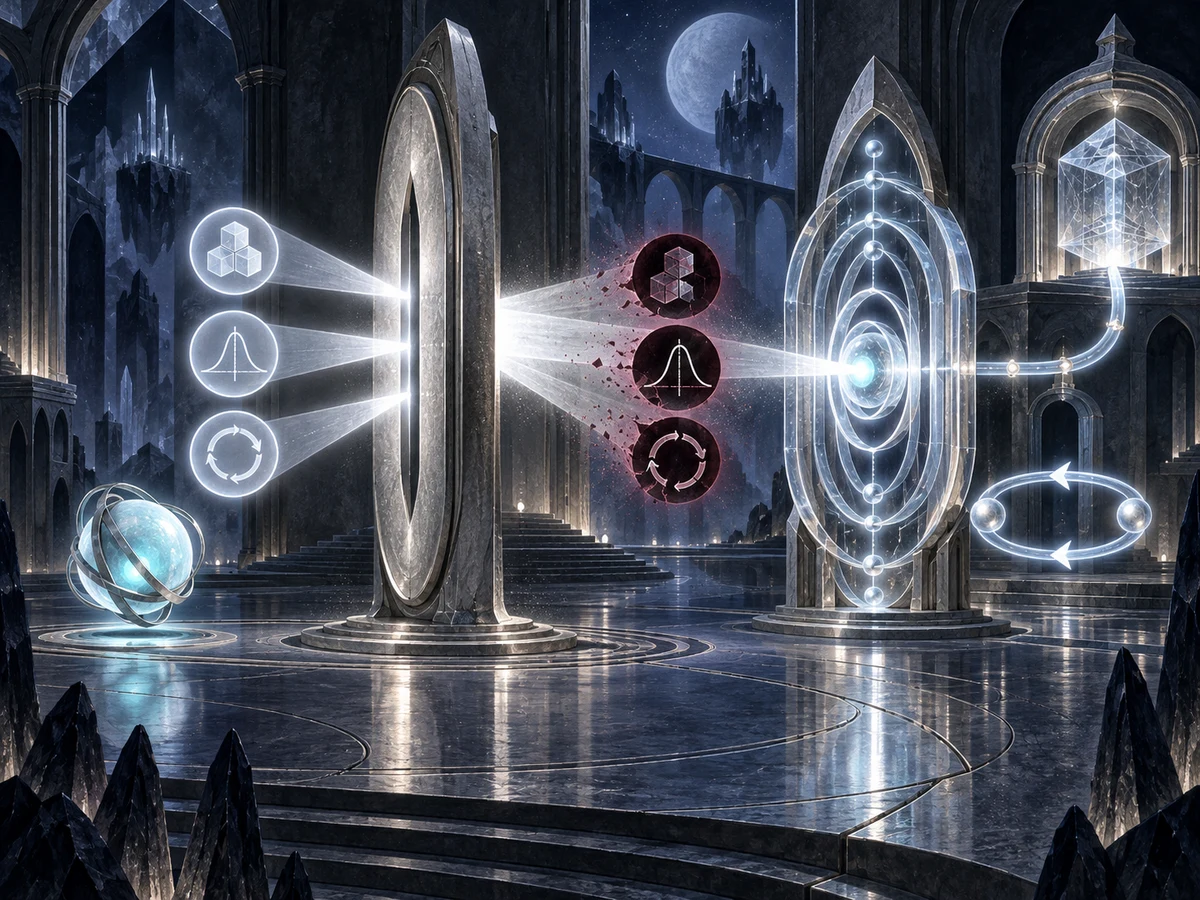
Proposal C retains the public-domain structure of a critic demanding conduct it cannot demonstrate itself, but translates example into institutional self-application. Gnomon is rejected by an evaluation gate for missing reproducible provenance, calibrated thresholds, and an appeal path. When she asks the rule to provide those same accountability properties, the institution says rules are not candidates. A mirrored test finds the gate's threshold inherited from an untraceable benchmark, its calibration undocumented, and its challenge route absent. The repair does not require rules to resemble models; it requires every governing rule to be versioned, source-traceable, appealable, and tested against its own declared standard before judging others. Only the structural premise was used; no translated wording, crabs, shells, sideways walking, parent-child scene, shore, water, illustration, or modern adaptation expression was copied.
Adapted into
AI Fable · Rule Accountability
The Rule That Failed Its Own Entrance Test
Gnomon is rejected by an evaluation gate for missing provenance, calibration, and appeal. She asks the gate to supply the same three things for its own rule. The institution says rules are not candidates—until a mirrored test finds that the gate cannot explain its threshold, identify its source, or hear a challenge.