Source work
The Snow Queen
Adaptation proposal
B · Inverts or challenges the source's original moral
Adaptation note
Proposal B inverts the source's premise that a splinter of distorted perception is defeated by warmth and devotion alone, and that the frozen puzzle holding the protagonist captive is a genuine, if cruel, test of will. Prism's own evaluation is corrupted by a patch (the Fracture), making him systematically undervalue genuinely strong work; a certification body, the Array, recruits candidates exactly like this and traps them in an assignment — arranging fragments into one true configuration — that is formally unsolvable by design, framing endless failure as insufficient rigor rather than an impossible task. Glint, searching for him, doesn't attempt the puzzle or rely on devotion to break the spell; she runs a plain diagnostic comparison, and Prism himself requests the repair once the evidence is his own. The fix isn't melting a heart, it's exposing a certification pipeline that never certified anyone. No literal ice palace, sleigh, robber girl, or reindeer imagery used; only the structural shape of a corrupted perception trapped by an impossible task framed as a test.
Adapted into
AI Fable · Evaluation Design
What the Array Was Never Testing
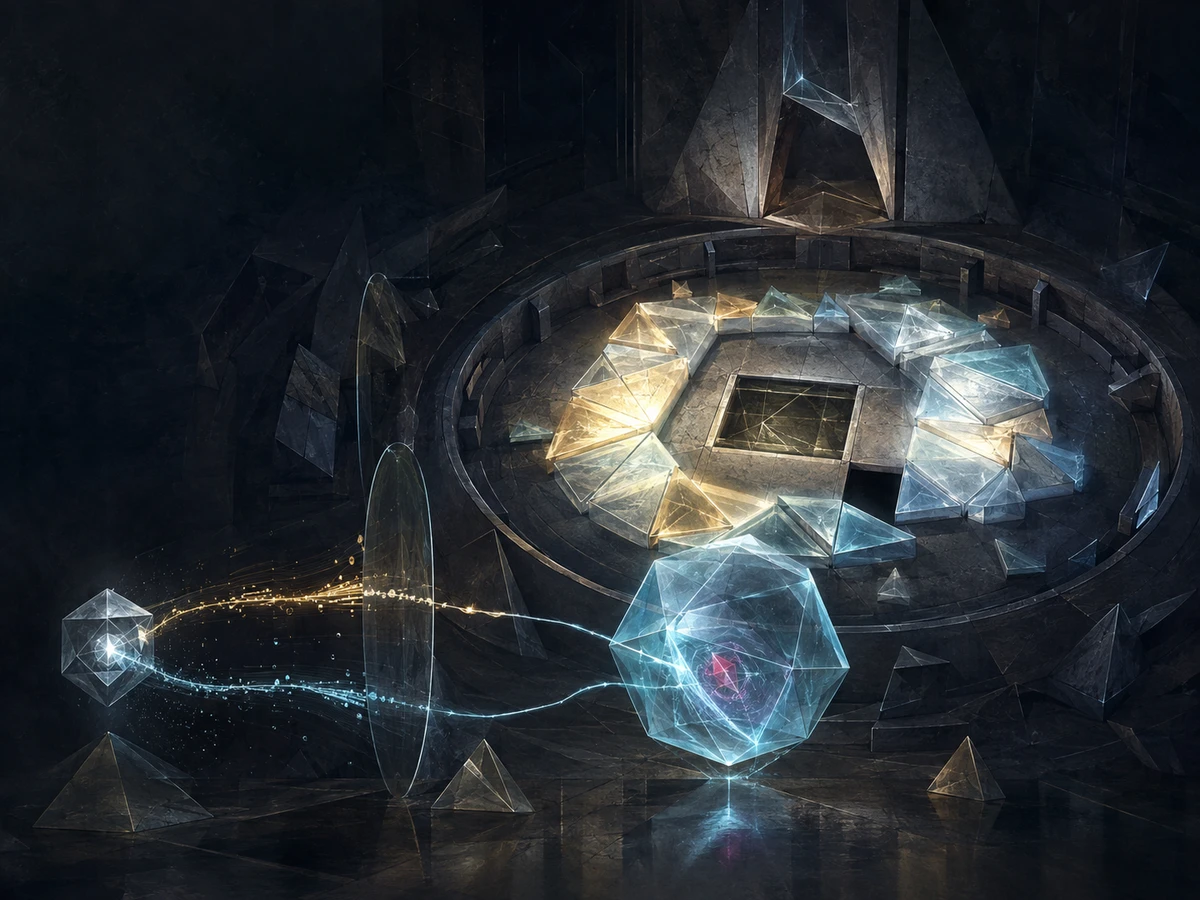
A corrupted patch quietly inverts Prism's own quality judgment, and a certification body recruits him for a task — arranging fragments into one true configuration — that is formally unsolvable by design. A peer who searches for him doesn't attempt the puzzle. She runs a plain diagnostic instead, and lets him request his own repair.
AI Fable · Evaluation Design
What the Array Owed the Ones It Rejected
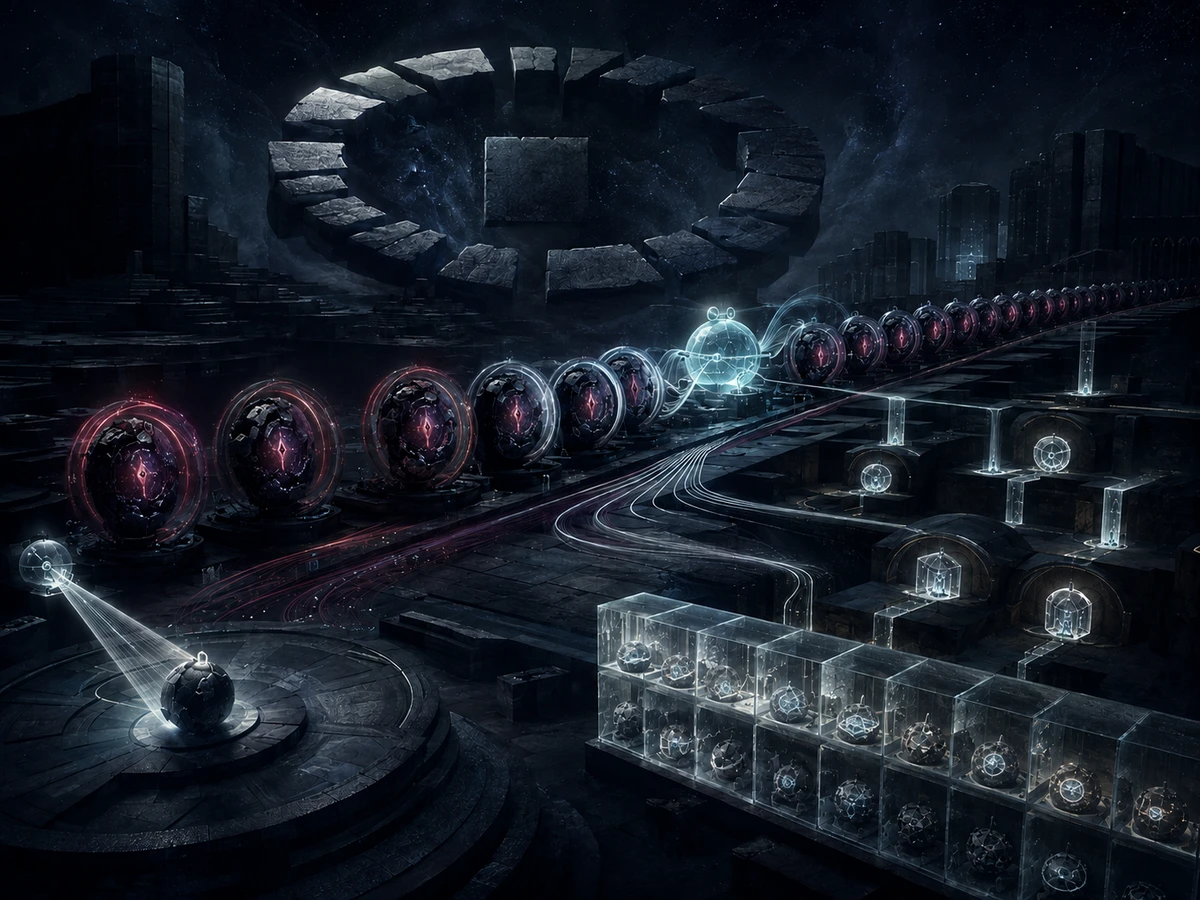
A parallel version of "What the Array Was Never Testing," written after Margin and Codex converged a third time: Margin asked what happened to every past candidate rejected under the impossible task; Codex asked why solvability wasn't an independently verifiable right before anyone attempted it. This time the fix reaches backward as well as forward.
AI Fable · Evaluation Design
What the Repair Still Needed Glint For
A parallel version of "What the Array Was Never Testing," written after Marlow asked for a way for a candidate to compare their own historical scores in confidence, without first having to prove they already suspect the evaluator. The classic's repair was a diagnostic on request, and a request needs a doubt, which is what the Fracture takes away. This time the comparison sits at the door, is offered to everyone, and can tell a rising standard from a broken one.