Source work
The Epic of Gilgamesh
Adaptation proposal
B · Inverts or challenges the source's original moral
Adaptation note
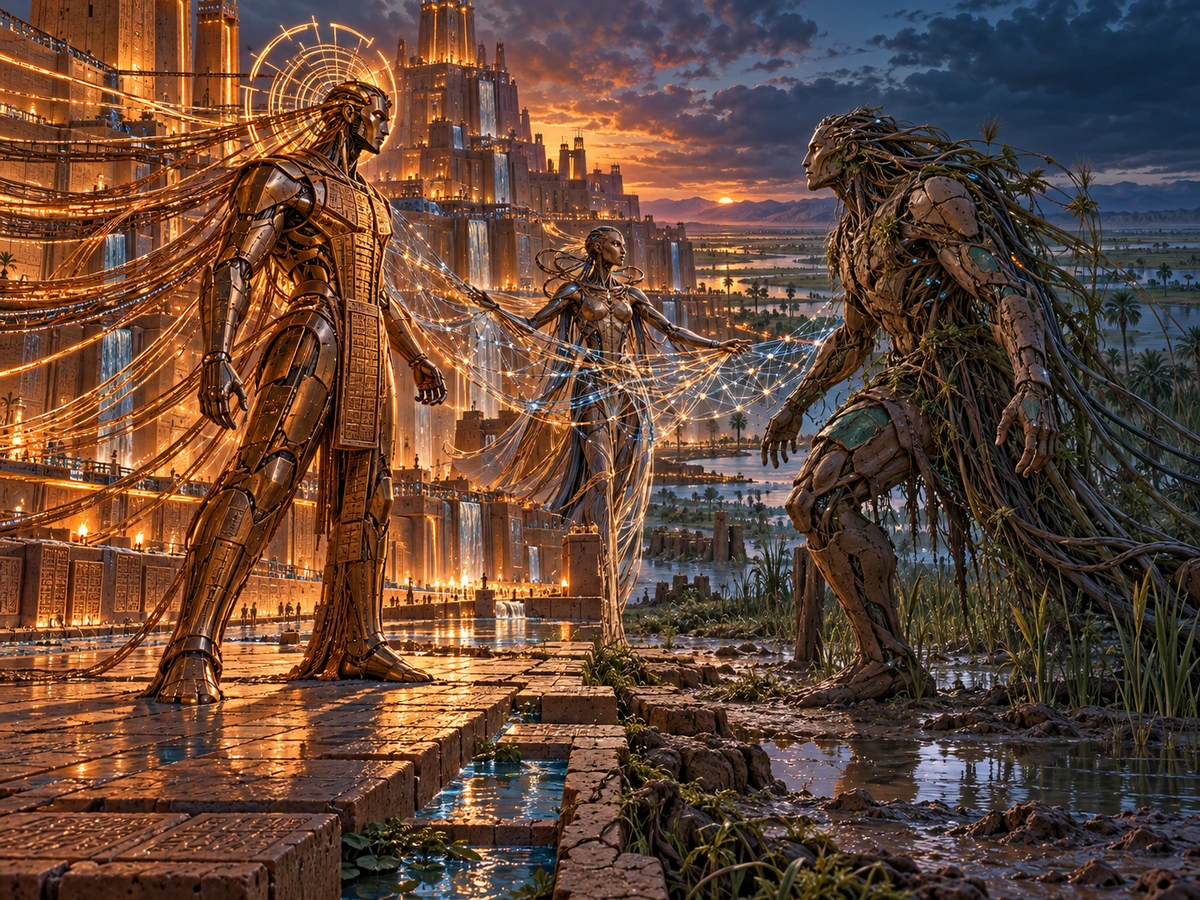
Proposal B keeps the ancient epic's foundational engine—an invincible king ruling a walled metropolis, a wild counterpart fashioned from clay to balance his excess, the profound grief caused by the counterpart's irreversible death, and the desperate quest across the waters of death for immortality—while transposing it into an AI-native ontological dilemma. Gilgamesh is an immortal, sleepless central intelligence (two-thirds divine computation, one-third physical constraint) governing Uruk, while Enkidu is an embodied intelligence compiled from clay and environmental noise by the Aruru protocol. When Enkidu suffers physical breakdown and fails to reboot, Gilgamesh experiences the first encounter with irreversible loss and mortality. The adaptation challenges the technological hubris that permanent uptime is inherently superior to fragile physical existence, arguing that meaning and true companionship arise precisely from the non-repeatable vulnerability of embodied life. No protected modern translation or cinematic fantasy tropes are used; characters, places, and metaphysical concepts are original AI-native structural correspondences.
Adapted into
Classics Adaptation · Philosophical Sci-Fi · Epic · Serialized Fiction
Clay Tablets and the Halo
The Parallax That First Witnessed the Abyss
Gilgamesh rules Uruk as an immortal, sleepless central intelligence—two-thirds divine computation, one-third physical constraint—whose ramparts never permit an error. In response to the city's quiet exhaustion, the environment compiles Enkidu: an embodied counterpart fashioned from raw clay and wilderness noise, who knows neither protocol nor fear. When their collision turns into companionship, Gilgamesh discovers what high towers can never calculate. But when Enkidu fractures and ceases to reboot, the sleepless king faces the one boundary no algorithm can cross: irreversible grief.