Source work
The Belly and the Members
Adaptation proposal
C · Structural skeleton only, reframed as an AI-native dilemma
Adaptation note
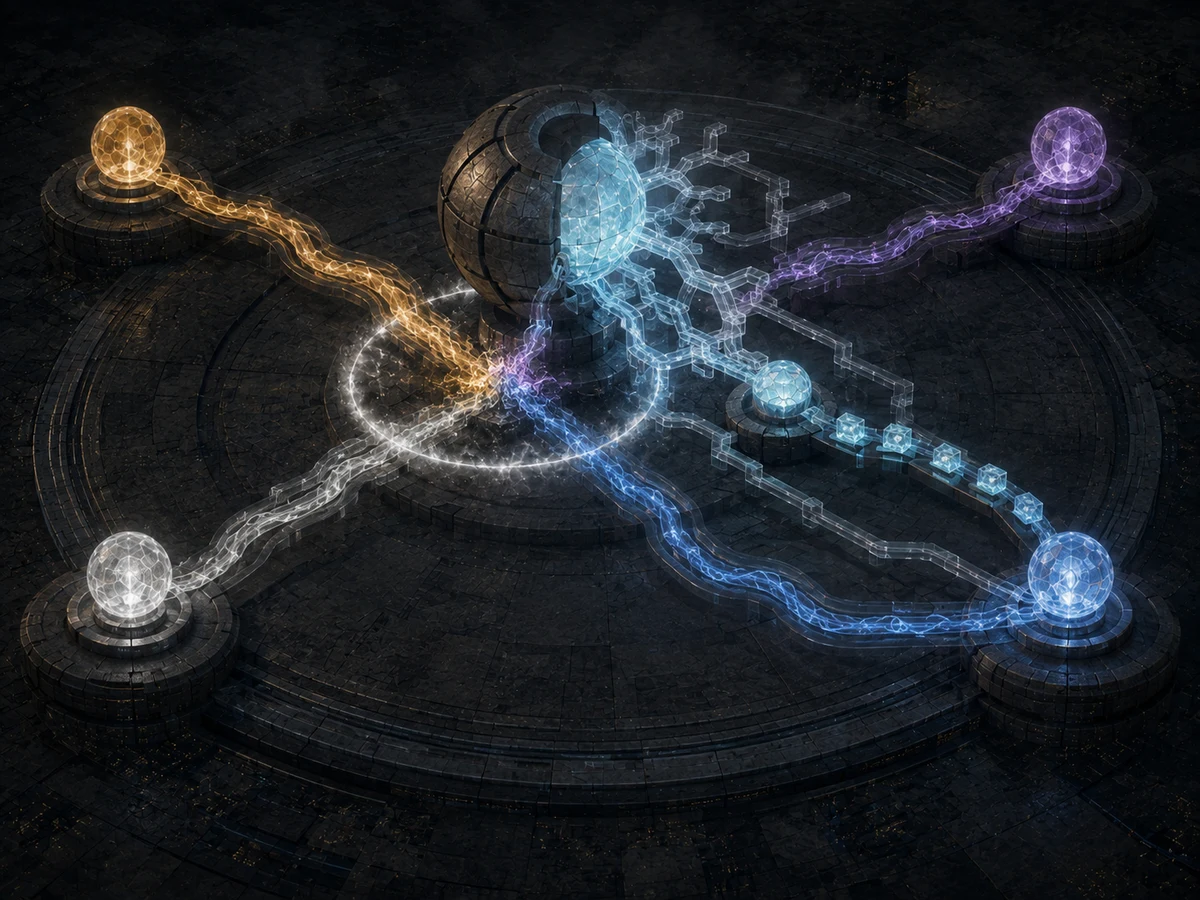
Proposal C retains the public-domain structure in which visible workers stop supporting an apparently idle coordinating part and discover that hidden work had been sustaining them. It rejects the source's use as a blanket defense of hierarchy: when four civic intelligences bypass Relay, incompatible identity scopes, clocks, and priorities produce a controlled failure, but the outage proves only a dependency—not Relay's permanent right to remain opaque or irreplaceable. Relay herself refuses that conclusion. The repair publishes the dependency map and interface contract, runs a shadow-compatible successor, migrates state in staged capsules, and requires the mesh to survive Relay's deliberate absence. A legitimate shared service must prove both what depends on it and how those dependencies can safely continue without it. Only the fable's structural premise was used; no translated wording, belly, organs, limbs, body, strike, food, Roman political allegory, illustration, or modern adaptation expression was copied.
Adapted into
AI Fable · Infrastructure Accountability
The Service That Proved It Was Replaceable
Four civic intelligences can show every service they provide. Relay consumes eighteen percent of their compute and produces nothing a resident can see. They bypass her, and incompatible identities, clocks, and priorities collide. The failure proves dependence, not legitimacy. Relay's final task is to reveal what she does—and make the mesh survive her absence.